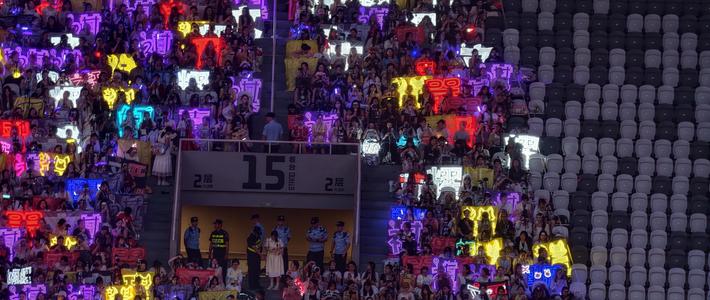
With just over a week left until National Day, when you open a ticketing app and check out your target shows, what many people see is the same sea of gray: tickets sold out, waitlist registrations open. For Jay Chou’s Nanjing stop first round of sales, one fan said even rounding up 30 people couldn’t snag a ticket.Xiaohongshu (RED) But a “sold out” is often not the end—beneath those oceans of light sticks people yearn to be part of, nearly every show still leaves one official channel for getting tickets later, and fans call these “returned tickets.”

What Exactly Are Returned Tickets
First, let’s line up the official announcements from August: G.E.M.'s Shenzhen stop re-released 12 shows simultaneously, Wang Heye’s Nanchang stop had a third release, Miriam Yeung’s Tianjin stop had a fourth release, and Wang Junkai’s Chongqing stop had a second release. The wording of these announcements is remarkably consistent, and the G.E.M. announcement states it most plainly: Shenzhen stop will sell the small number of refunded tickets generated during the refund window of the sales phase, and the re-release will be offered for public sale on the official ticketing platform at 15:00 on August 19.Weibo
The logic is simple: today’s popular concerts are mostly strict real-name plus conditional refunds. After the first release, there’s always someone whose schedule conflicts, who can’t make the trip across cities, or who calculates flights and hotels exceed their budget and refunds. After the refund window closes, the organizer puts this small batch of refunded tickets back on sale through official channels—that’s what a returned ticket is. It’s never the “inside channel” scalpers talk about.
Fans who manage to snag these tickets aren’t rare: someone grabbed a returned ticket for Wang Sulong’s August 29 third release at the Bird’s Nest in Beijing, joked about sitting in the last row of the first tier, but still felt very happy and very close to the stage.Weibo
Three Rules of Returned Tickets—Don’t Camp Out Without Knowing Them
Rule one: release timing is concentrated after the refund window closes. Fan data teams have already figured out this rhythm, and one widely shared ticket-camping guide explicitly states that tickets for the 25th, after refunds fully closed at 19:00 on the 23rd, will be released in rolling fashion starting at 19:00 on the 23rd.Weibo So don’t believe mystified “release times”—the window with the highest density of returned-ticket drops is usually the first 24 to 48 hours after the refund deadline, and official second and third releases also basically open after the refund window ends.
Rule two: refund rights get tighter with each round, so think carefully before you grab. Reading several announcements together, the shrinking curve is clear: G.E.M.'s second release already explicitly stated that the “free refund” benefit is no longer available and refunds incur a fee; Miriam Yeung’s Tianjin stop fourth release directly announced that tickets sold this time have no free refund period and refunds of any form will no longer be accepted.Weibo Wang Junkai’s Chongqing stop second release was even more blunt: this sale carries no refund rights, and no refunds or exchanges of any form will be accepted.Weibo In other words, the returned ticket you camp out for yourself probably has no way back either.
Rule three: strict real-name, no gifting. Second-release announcements repeatedly feature phrases like “entry denied if person, ticket, and ID information don’t match” and “real-name attendance, gifting prohibited”—security checkpoints only recognize when the ID chip matches the ticket information. This means returned tickets are only meaningful if grabbed through official channels; scalper tickets, gifted tickets, and “day-of escort-in” services are all dead ends for this kind of show.
Open the ticketing page of a popular show, and what you see is the result of these rules: all stand-price tiers show “out-of-stock registration,” and only arena tiers over a thousand yuan remain on sale. This is the page state for Jay Chou’s Nanjing stop on Maoyan, and it’s also a common sight in this National Day ticket-grabbing season.

To Pay 200 Yuan for Proxy Grabbing, Settle Three Accounts First
Knowing the rules, many people are still tempted: wouldn’t paying two or three hundred yuan to have someone camp out and grab for you work? On Xianyu this is already a “mature business,” and fan groups circulate experiences like “script camping has a higher success rate than manual camping.” But this money isn’t as worthwhile as you’d imagine.
First account: you might get scammed, and the loss is far more than the ticket price. Media has already exposed the typical scheme: hiring an “Xianyu” proxy to grab concert tickets for only a 200-yuan fee, but in the end someone was swindled out of 80,000 yuan.Xiaohongshu (RED) A low-price hook builds trust, then they find excuses to get you to transfer money off-platform—this is a script that appears repeatedly in anti-fraud videos.
Second account: “proxy grabbing” itself may be illegal, with three tiers of penalties. Among the multiple concert-ticket proxy-grabbing cases reported by Shanghai police in late July: one person was criminally detained for making over 10,000 yuan profit from proxy grabbing; one was administratively detained for collecting 800 to 1,500 yuan per ticket to grab 8 tickets; and someone was fined even without grabbing a single ticket—Chen’s act of using cheating software to grab tickets had already disrupted normal ticketing order, and he was fined for disturbing order of a unit.Weibo In the earlier Zhenjiang, Jiangsu case, Li and Sheng’s gang snapped up more than 60,000 concert tickets with a face value of over 50 million yuan, illegally profiting more than 16 million yuan.Zhihu Five defendants were convicted for the crime of illegally obtaining computer information system data. Don’t think this is only about concert tickets: a man in Jiangxi who used ticket-grabbing software to grab tickets for others was convicted of the crime of reselling tickets, sentenced to one year and six months, and fined 1.24 million yuan.China News Service
And don’t think “I’m just the buyer, the risk is on the grabber’s side.” Once platform risk controls trigger, orders grabbed with cheating software may be locked and invalidated, and the proxy-grabbing fee you paid is equally unprotected.
Third account: even if they grab it for you, the result may not match what you paid. In late August, a netizen shared a real experience: hiring a proxy to grab Xu Song concert tickets, buying the most expensive 818-yuan stand seat, thinking it was locked in, only to climb 5 floors to row 22 and watch from the nosebleeds.Xiaohongshu (RED) Proxy grabbing can lock in the ticket tier, but not the view—the same sum of money in a stranger’s hands might land you in the corner of the last row.
If You Should Be Camping for Returns, Here’s How
Instead of handing your money to a proxy grabber, do three things.
First, trust only official channels. Ticketing platforms like Damai, Maoyan, and Funwandao, plus the organizer’s official Weibo account, are the only sources of second- and third-release announcements, so set a reminder for the announced time. Platform-side interception is also continuously stepping up: during TNT’s Shanghai show, Damai joined with police to intercept up to 56.12 million malicious ticket-grabbing attempts, and also caught 7 scalpers and cracked 4 cases.Weibo
Second, treat community information only as a timing reference. The refund deadlines and rolling release rhythms summarized by data teams can help you set your alarm in advance; but before the official announcement comes out, don’t believe any inside info that “guarantees a second release.”
Third, confirm before grabbing: is this show worth camping for returns. Strict real-name hot shows are worth waiting for—right after Jay Chou’s Nanjing stop second release dropped, a fan posted a screenshot of their order, saying their friend got them one on Damai and they grabbed one themselves on Maoyan.Xiaohongshu (RED) The posted order page still showed the original price of 1,080 yuan. But for shows with average popularity, be prepared for returned tickets that “don’t even sell out”: at Hou Mingkao’s concert, more than an hour after sales opened there were still returned tickets.Weibo For shows like this, you can calmly pick up bargains right before the show opens, no need to rush.

Finally, two signals worth watching: one is the refund window deadlines for each National Day show—that’s the starting gun for concentrated released-ticket drops, and clues can usually be found in the “ticketing notes” on the show’s detail page; the other is the reservation and notification switches on official ticketing platforms—returned tickets are often released in batches at night, and the difference between having alerts or not is huge.
Tickets are expensive, detours are even more expensive. There’s still time before National Day—may everyone walk through the front gate at face value.