






























4
9
【存档】S3 Graphics: Gone But Not Forgotten不在了但是没有被遗忘
2024-07-13 10:31:11
0点赞
0收藏
0评论
【存档】S3 Graphics: Gone But Not Forgotten不在了但是没有被遗忘
By Nick Evanson August 24, 2023
Serving tech enthusiasts for over 25 years. TechSpot means tech analysis and advice you can trust. When you buy through our links, we may earn a commission.
x56 AMD B650 Motherboard Roundup: VRM Thermals and Then Some
16 comments Home routing and encryption technologies are making lawful interception harder, Europol warns
18 comments Transhumanist author predicts artificial super-intelligence, immortality, and the Singularity by 2045
Index
These days, it's rare to see a new hardware company break ground in the world of PCs. However, 30 years ago, they were popping up everywhere, like moles in an arcade game. This was especially true in the graphics sector, with dozens of firms all fighting for a slice of the lucrative and nascent market. One such company stood out from the crowd and for a brief few years, held the top spot for chip design in graphics acceleration. Their products were so popular that almost every PC sold in the early 90s sported their technology. But only a decade after its birth, the firm split up, sold off many assets, and rapidly faded from the limelight. Join us as we pay tribute to S3 Graphics and see how its remarkable story unfolded over the years.

The formation of S3 and early successes The tale begins in early 1989, an era of the likes of the Apple Macintosh SE/30, MS-DOS 4.0, and the Intel 80486DX. PCs then generally had a very limited display output, with the drawing handled by the CPU and usually just in single bit monochrome; but with a suitable add-in card or expansion peripheral, accelerated rendering with 8-bit color was possible. Prices for such extras could start at $900 and often go much higher than this. It would be for this market that Dado Banatao and Ronald Yara would put together a new startup based in Santa Clara, California: meet S3, Inc. Banatao's story is worthy of its own tale, as is Yara's, and by this time, they were both highly successful technology entrepreneurs and electrical/electronics engineers. Within two years, they had their first product for sale: the P86C911 (also known as the S3 Carrera). This chip accelerated line drawing, rectangle filling, and the raster operations in Windows, mostly involving what are known as bit block transfers. This is where small arrays of data, that as a whole make up the entire screen, are moved about, overlayed, copied, etc.
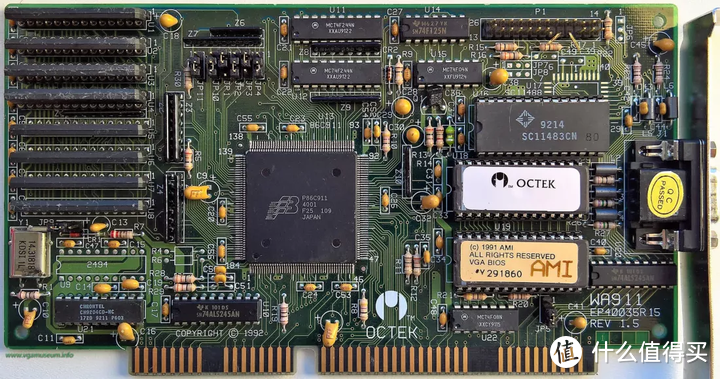
The S3 P86C911 - Image: VGA Museum Just as AMD and Nvidia do today, S3 used other companies to manufacture and distribute the chips, which would then be purchased by add-in board vendors for their own products. Famous names, such as Diamond Multimedia and Orchid Technology, released cards sporting 1 MB of VRAM, an output as high as 1280x1024 in 16 colors, and a 16-bit ISA connection system. Reviews were quite favorable at the time – it wasn't the fastest accelerator out there, but it was competitively priced. The benchmark for all so-called 2D accelerators then was the ATi Mach series of chips, but where an ATI Graphics Ultra card powered by the Mach 64 retailed at $899, cards with the S3 P86C911 could be had for as little as $499. In those early days, S3 maintained a healthy development cycle, and continued to improve and modernize their chip design. By 1994, add-in board vendors were using the new Vision series of accelerators: full 16-bit color output at 1280x1024, and up to 4 MB of fast page mode (FPM) or extended data out (EDO) 64-bit DRAM. There was even acceleration for MPEG video files.
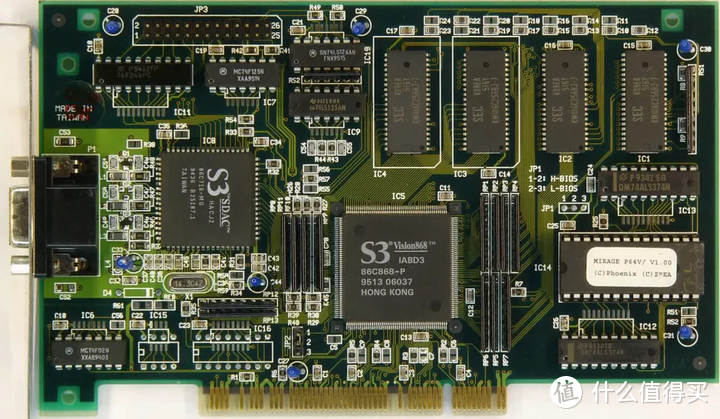
S3 Vision868 - Image: VGA Museum Again, those chips weren't the fastest available, but they were significantly cheaper than the competition. Naturally, this caught the eye of system builders and that's how S3 chips would grace many people's first PC. A quick glance at the above image, from German card vendor Spea, highlights a particular issue that manufacturers faced in the mid 90s: multiple separate chips were required to handle various roles. At the least, one was needed for the primary clock and another for the digital-to-analogue conversion (i.e. the RAMDAC). To that end, S3 released the Trio chip series a year later, which integrated the graphics acceleration circuits, with the RAMDAC and clock generator. The result was a notable reduction in costs for card vendors, which pushed S3's popularity even further, giving them the lion's share of display adapter market.
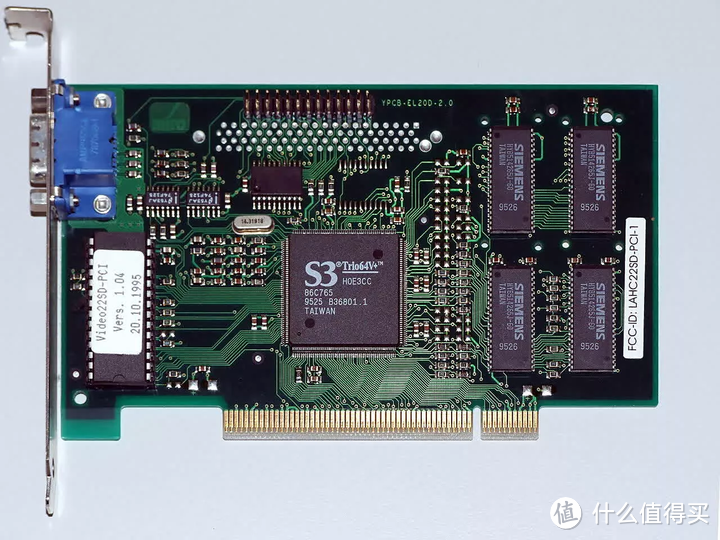
S3 Trio64V+ - Image: Wikipedia By 1995, game consoles such as the Sony PlayStation and Sega Saturn showed the direction that the graphics market was now dedicated towards, and with S3 at the height of their powers, they were one of the first chip designers to meet these new demands, with an "all-in-one" offering. Given how well they had mastered 2D and video acceleration, how hard could 3D be? Another dimension and the first failures The best selling PC game in 1995 was Command & Conquer, a real-time strategy game initially released for DOS that used 2D isometric graphics. However, console owners were being treated to 3D images, similar to those being generated in arcade machines. So the pressure was on for hardware makers to provide acceleration in this area, too. Software support was already available, as OpenGL by then was 3 years old, and Microsoft had snapped up RenderMorphics at the start of 1995, in order to integrate their Reality Lab API into their forthcoming Windows 95 (to ultimately become Direct3D). By the end of the year, S3 launched the ViRGE ('Virtual Reality Graphics Engine') chip; essentially an improved Trio with some 3D capability shoehorned into it (marketed as the S3d Engine).
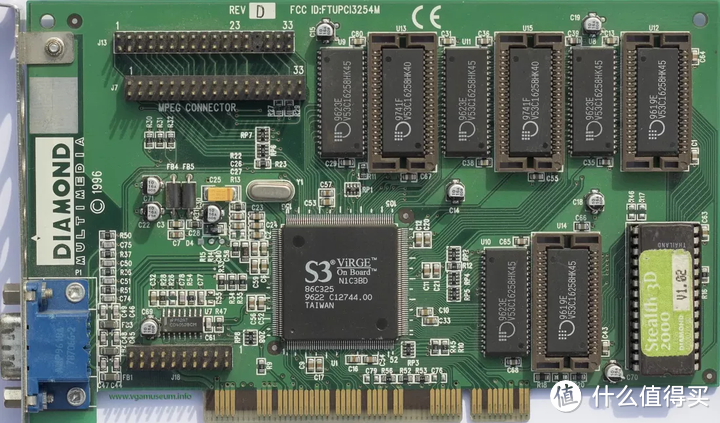
S3 Virge graphics card - Image: VGA Museum Add-in cards using the processor weren't readily available until early 1996, and these first offerings were met with universal ambivalence. Up to this point, 3D games on the PC were nearly always rendered via the CPU and when handling basic polygons, lit via Gouraud shading and unfiltered textures applied, the ViRGE was generally a little faster than the best CPUs of that time. The "S3 ViRGE" was generally a little faster than the best CPUs of that time... However, with any other additional 3D feature applied (such as texture filtering or perspective correction), the performance would nose dive, especially at resolutions equal to or greater than VGA (640 x 480). There were a number of reasons for this, but two aspects stood out against the others. Firstly, developers had to use S3's own API to take advantage of the 3D acceleration, as they didn't offer any OpenGL support in their drivers initially. Proprietary APIs aren't necessarily worse than open sourced ones, but once other manufacturers released their own 3D chips, with full compatibility with OpenGL, few developers bothered to make S3d modes for their games.
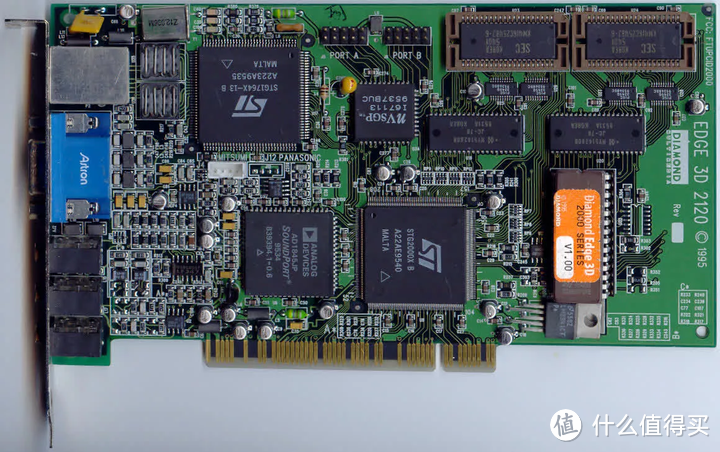
This card sports two Nvidia NV1 chips, made by STMicroelectronics. Image: Wikipedia With a dearth of programmers working with the API, there wasn't enough external investigation and feedback to help improve it. And then there was the hardware itself – texture filtering was exceptionally slow, taking far too many clock cycles to sample and blend a bilinear texel. So at VGA resolution, the chip would just bog down under the workload, dragging the frame rate into the dirt. But despite these failings, ViRGE cards actually sold quite well, thanks to its strong 2D performance, decent price, and indifferent competition. Nvidia's very first product, the expensive NV1, was launched a few months before S3's was targeted at the wrong direction that 3D graphics was progressing in, and ATI's 3D Rage series, released in April 1996, wasn't much better than the ViRGE. It would be unfair to be overly critical of S3 at this stage, though. After all, 3D accelerators for the general consumer were in their infancy and it would take a number of years for the field to settle. The ViRGE lineup would see a number of models released over a period of 5 years, with faster versions (such as the ViRGE/DX) offering improvements in every area.
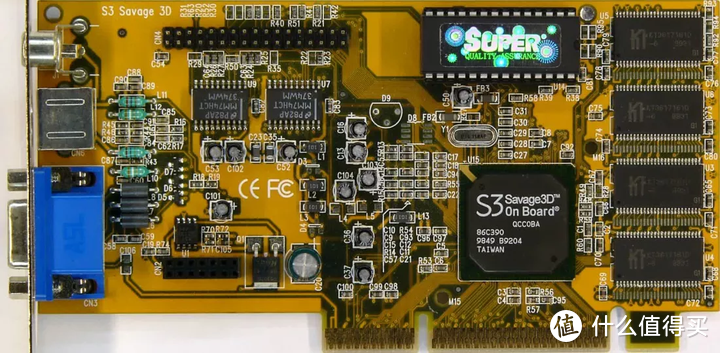
S3 Savage3D - Image: VGA Museum In 1998, S3 Inc announced a completely new graphics processor: the Savage3D. This chip had far superior texture filtering than the ViRGE (bilinear was now single cycle), although multitexturing was still required multipass rendering – that is, if you wanted to apply two textures to the same pixel, the whole scene would effectively need to be processed twice. The design also carried better video capabilities, with a built-in TV encoder and superior scaling and interpolation for MPEG and DVD. S3 even went as far to create their own texture compression algorithm, called S3TC, which would eventually become integrated into the OpenGL and Direct3D APIs. On paper, it should have been a huge hit for them. But it wasn't. Savage times for S3 The first problem that customers experienced with the Savage3D was simply finding one on the shelves. It was the first graphics processor to be fabricated on a 250nm node, by the UMC Group. But the manufacturer was also the first to be working at this scale and, invariably, wafer yields were rather poor. This deficiency of fully functioning dies meant that relatively few add-in board vendors bought the Savage3D, to the point that the likes of Hercules was testing each chip from the purchased trays and hand selecting the viable ones. Long term partner, Diamond Multimedia, eschewed the processor altogether.
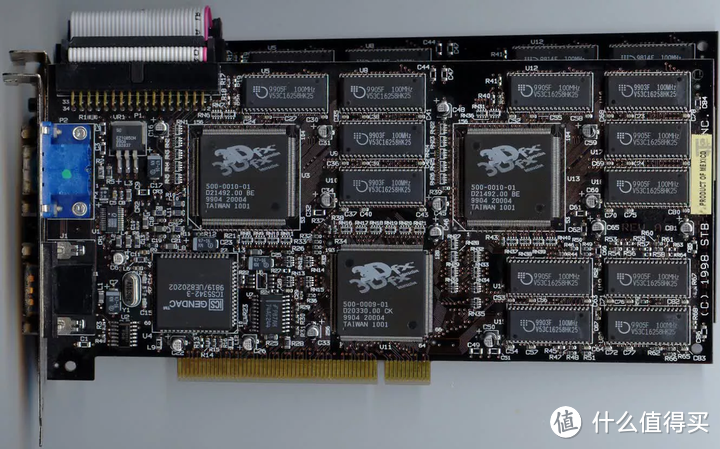
A pair of mighty 3dfx Voodoo2 cards. The drivers on release were notoriously buggy (pre-release ones, given to reviewers, had no OpenGL support at all) and S3 dropped support for their own API. But more importantly, the competition was now in full swing. Where the first ViRGE had the market almost to itself, and the great 2D reputation of old to back it up, the Savage3D faced far meatier opponents. By the fall of 1998, Nvidia had their NV4-powered Riva TNT out, sporting two pixel pipelines, which allowed for single pass multitexturing. The same ability was also fielded by 3Dfx's Voodoo2 cards, but where the Riva TNT's pixel output rate would half with dual textures, the Voodoo2 wasn't affected. But even in single texturing games, the performance of the Savage3D was disappointing. Vendors couldn't even sell their products at a low price, to undercut the opposition, due to the limited availability of the chips.
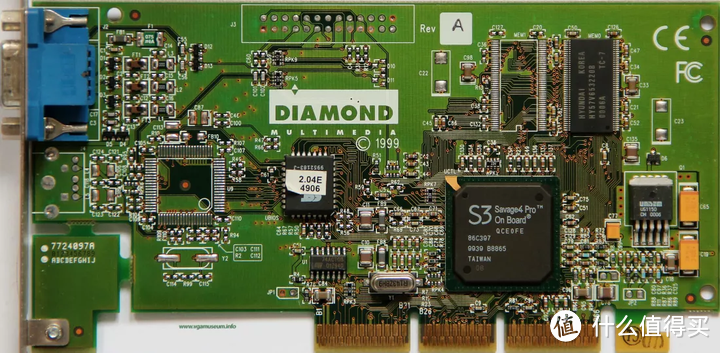
S3 Savage4 Pro - Image: VGA Museum S3 resolved many of these issues within the space of a year and the following Savage 4 chip was very much the product the 3 should have been. But where S3 was getting things right second time round, the likes of 3Dfx, Matrox, and Nvidia were on form right away. Thus Savage4-powered cards were no better than models from the previous year and once again, OpenGL performance was dismal. At least Diamond were back with S3, and plenty of other vendors churned out numerous models. The only saving grace for the Savage4 was S3TC. The lossy texture compression system was supported by Quake III Arena and Unreal Tournament (the mega-games of the time) and provided a noticeable boost in visual quality, for very little performance impact. It was within this year that S3 Inc decided to splash its cash around, purchasing the assets and IP of fellow graphics card company Number Nine in December (and then licencing it back to that company's design engineers 2 years later). Then, in the summer of 2000, S3 merged with long-term chum Diamond Multimedia, in a move to expand their product portfolio.
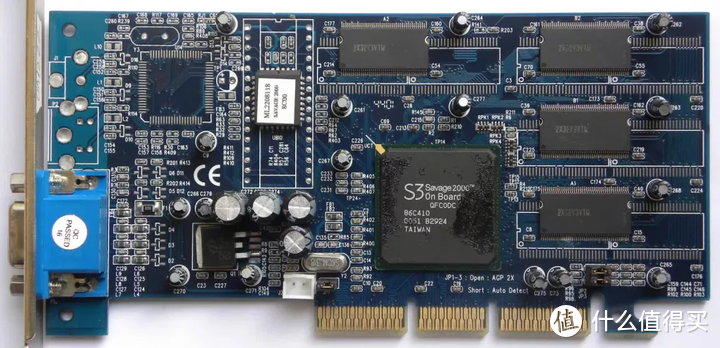
S3 Savage2000 - Image: VGA Museum The newly wedded couple's first offspring was the Savage 2000, S3's first graphics chip to offer Direct3D 7.0 compatibility. The rendering catchphrase of this era was 'Hardware Transform and Lighting' (TnL); instead of the CPU being used to process all of the geometry in a 3D scene, this stage in the chain was done by the graphics processor. With two pixel pipelines, each fielding two texture units, and a clock speed of 125 MHz, the Savage 2000 was within spitting distance of Nvidia's new GeForce 256. But, to perhaps little surprise, that wasn't the case – yet again, drivers let the product down. On release, the hardware TnL wasn't supported, and when it did finally appear, the results were frequently buggy and slow. Overall, it wasn't actually a bad graphics card, it just wasn't as good as the competition (the poor Direct3D performance didn't matters either) nor significantly cheaper. For all S3's long history of design excellence and market leadership, they were now floundering, seemingly lost at sea. All change at the helm Just three months after S3 Inc and Diamond Multimedia announced their merger, the company rebranded itself as SONICblue and in 2001, sold the graphics division to Taiwanese manufacturer, VIA Technologies. SONICblue would focus on the multimedia industry, making consumer electronic products such as video recorders and MP3 players, before shutting down and filing for bankruptcy in 2003. S3, though, would live on with an entirely unoriginal new name (S3 Graphics) and a new purpose: integrated chipsets. At the start of the millennium, CPUs from AMD and Intel – such as the Athlon XP and Pentium III – didn't have a graphics processor built into them. To get a video output from your PC, you needed an add-in graphics card or, as was the trend then, a motherboard that a chipset with graphics capability.
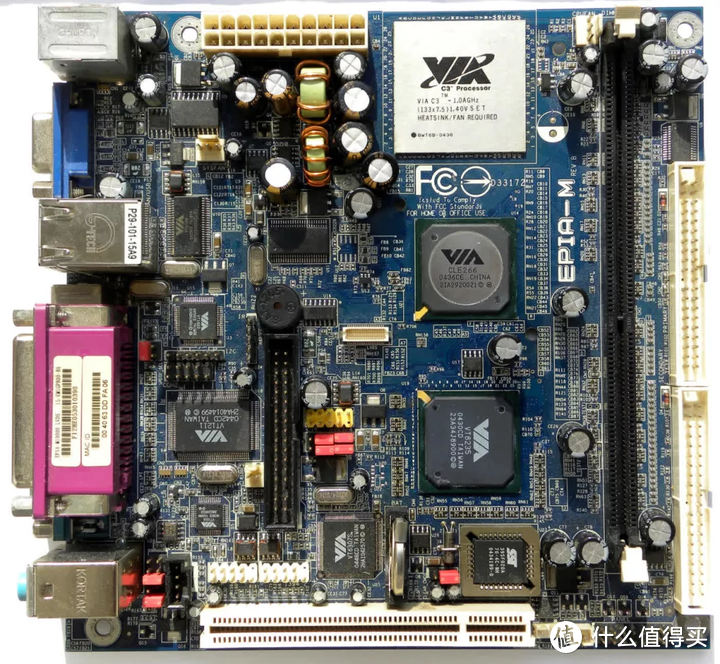
VIA's CLE266 contains an S3 hybrid-Savage graphics processor. Image: VGA Museum VIA Technologies was very competitive in the motherboard sector for a while, so the purchase of S3 made a lot of sense. Rather than creating something new from scratch, the engineers took elements from previous graphics cards: the 2D and media engines from the Savage 2000 and the 3D pipelines from the Savage4 were melded together to make the ProSavage system. Part of the reason as to why S3's earlier products could be sold cheaper than Nvidia's, for example, was the fact that their designs were much smaller. The processors used fewer transistors and the resulting die area was much smaller, making them ideal for chipset integration. But with the discrete graphics card market now booming, VIA fancied a slice of it for themselves, and so once more into the fray, S3 Graphics returned with the Chrome series of processors in 2004. The first model was called the DeltaChrome, featuring full Direct3D 9.0 support, with 4 pipelines for vertex shaders and 8 for pixel shaders. By then, ATi and Nvidia were fielding incredibly powerful graphics cards, and both companies were experimenting with additional features beyond those required for D3D 9.0 (such as higher order surfaces and conditional flow control). S3 Graphics wisely chose to keep things somewhat simpler and early signs of its performance were encouraging but somewhat mixed.
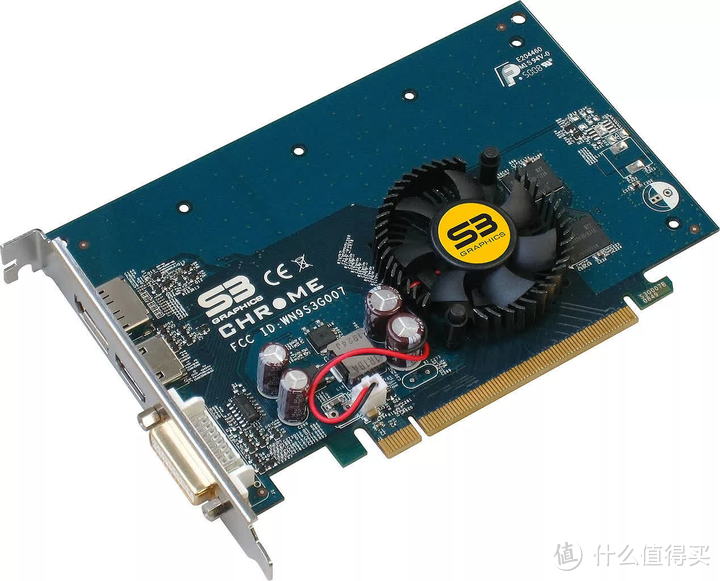
S3 Graphics's final hurrah – the Chrome 540 GTX. Image: Wikipedia However, later testing showed the processor (we were calling them GPUs then) to have serious issues when using anti-aliasing. But VIA and S3 Graphics persevered, and the Chrome line up continued for 5 more years, switching to a unified shader architecture in 2008. These later models were very much at the bottom end of gaming performance, being no better (and typically worse) than the budget sector offerings from ATi and Nvidia. Their only saving grace was the price: the Chrome 530 GT, for example, had an MSRP of just $55. These would be the last discrete graphics cards designed by S3 Graphics, although VIA continued to use their GPUs as integrated components in their motherboard chipsets. But in 2011, VIA called it quits and sold off the entirety of S3 Graphics to another Taiwanese electronics giant called HTC. Why this phone manufacturer would buy a GPU vendor may seem to be somewhat of a puzzle. Unlike Apple, HTC didn't design its own chips for its phones, instead relying on offerings from Qualcomm, Samsung, and Texas Instruments. The purchase was purely to expand their IP portfolio, to generate income from licencing the patents for S3TC. Only a name and fond memories are left There hasn't been a chip sporting the name of S3 or S3 Graphics for over a decade now, and we are unlikely to ever see one again. HTC has done nothing with the IP since purchasing them all those years ago. So we're just left with the name, memories good and bad, and perhaps a few questions as to why it all went so wrong for them. In the 2D acceleration era of graphics cards, S3 was almost untouchable and held a considerable slice of the market. They clearly had good engineers in this area, but that doesn't automatically translate into being masters of the world of polygons. Yes, the ViRGE was underwhelming and the Savage3D was released too early, with manufacturing issues and poor drivers besmirching S3's reputation.
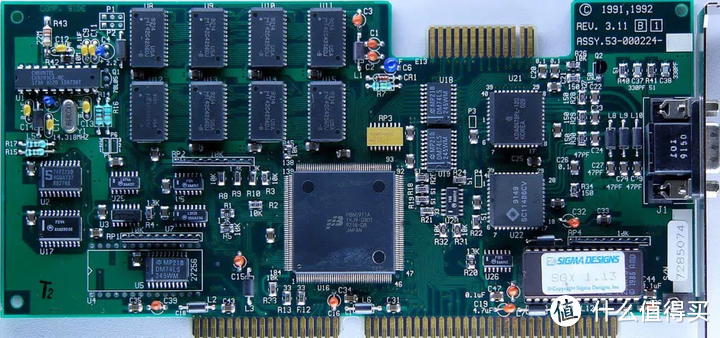
Back to better times, the S3 P86C911A. Image: VGA Museum But these could have been solved in time, as the overall designs were fundamentally sound. Instead, the company's management chose a different tack – buying up another failing graphics company, then merging with a consumer electronics group, before finally throwing in the towel altogether. Other great names of that era (3dfx, Rendition, BitBoys, to name but a few) all followed a similar path and their products were sometimes the best around. And just like S3, they're now just footnotes in history, absorbed into other companies or lost to Wikipedia pages. The story of S3 shows that in the world of semiconductors and PCs, nothing can be taken for granted, and continued success is a complex combination of inspired engineering, hard work, and a fair degree of luck. Their products are no more, and the name is gone, but they're certainly not forgotten.
DeepL翻译:
如今,很少能看到一家新硬件公司在个人电脑领域取得突破。然而,在 30 年前,它们就像街机游戏中的鼹鼠一样,随处可见。尤其是在显卡领域,几十家公司都在争夺这个利润丰厚的新兴市场。
其中有一家公司脱颖而出,在短短几年时间里占据了图形加速芯片设计的头把交椅。他们的产品大受欢迎,90 年代初销售的几乎每台个人电脑都采用了他们的技术。但在诞生仅十年后,该公司就宣告解体,出售了许多资产,并迅速淡出了人们的视线。
让我们一起向 S3 Graphics 表示敬意,看看它这些年来是如何发展壮大的。
S3 的成立和早期的成功
故事开始于 1989 年初,那是苹果 Macintosh SE/30、MS-DOS 4.0 和英特尔 80486DX 等产品大行其道的时代。 当时的个人电脑通常只有非常有限的显示输出,绘图由 CPU 处理,而且通常只是单色单比特;但如果有合适的附加卡或扩展外设,就可以实现 8 比特彩色加速渲染。
这种外围设备的价格从 900 美元起,通常比这个价格高得多。达多-巴纳塔多和罗纳德-亚拉正是看中了这一市场,在加利福尼亚州圣克拉拉市成立了一家新公司:S3 公司。
Banatao 和 Yara 的故事各有千秋。此时,他们都已是非常成功的技术企业家和电气/电子工程师。
不到两年,他们就有了自己的第一款销售产品:P86C911(又称 S3 Carrera)。这款芯片加速了 Windows 中的直线绘制、矩形填充和光栅操作,主要涉及所谓的位块传输。在这种情况下,构成整个屏幕的小数据阵列会被移动、叠加、复制等。
S3 P86C911 - 图片: VGA 博物馆
就像今天的 AMD 和 Nvidia 一样,S3 利用其他公司制造和分销芯片,然后由附加板供应商购买用于自己的产品。钻石多媒体(Diamond Multimedia)和兰花科技(Orchid Technology)等著名公司推出的显卡拥有 1 MB 的 VRAM、高达 1280x1024 的 16 色输出以及 16 位 ISA 连接系统。
当时的评价相当不错--它不是最快的加速器,但价格很有竞争力。当时,所有所谓 2D 加速器的基准都是 ATi Mach 系列芯片,但采用 Mach 64 的 ATI Graphics Ultra 显卡零售价为 899 美元,而采用 S3 P86C911 的显卡零售价仅为 499 美元。
在早期,S3 保持着健康的开发周期,并不断改进和更新其芯片设计。到 1994 年,插件板供应商开始使用全新的 Vision 系列加速器:1280x1024 的全 16 位彩色输出,以及高达 4 MB 的快速页面模式 (FPM) 或扩展数据输出 (EDO) 64 位 DRAM。甚至还可以加速 MPEG 视频文件。
S3 Vision868 - 图片: VGA 博物馆
同样,这些芯片的速度并不是最快的,但它们比竞争对手便宜得多。这自然吸引了系统制造商的目光,S3 芯片也因此成为许多人第一台 PC 的首选。
上图是德国板卡供应商 Spea 的产品,它凸显了 90 年代中期制造商面临的一个特殊问题:需要多个独立的芯片来处理不同的任务。至少需要一个用于主时钟,另一个用于数模转换(即 RAMDAC)。
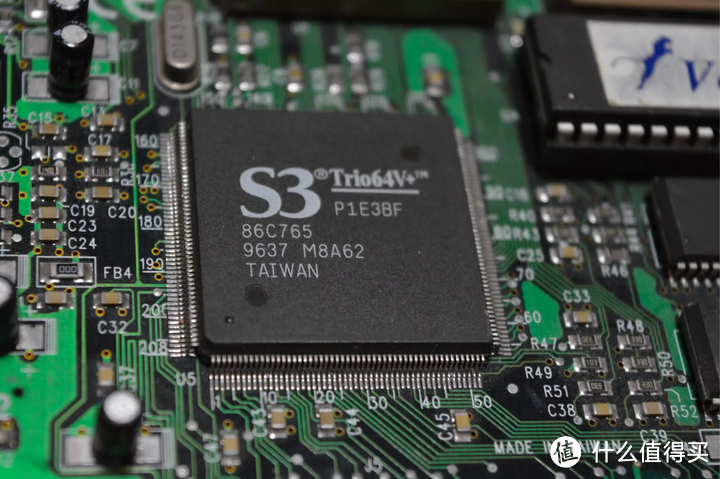
为此,S3 在一年后发布了 Trio 芯片系列,集成了图形加速电路、RAMDAC 和时钟发生器。其结果是显著降低了显卡供应商的成本,从而进一步提升了 S3 的知名度,使其在显示适配器市场上占据了绝大部分份额。
S3 Trio64V+ - 图片: 维基百科
到 1995 年,索尼 PlayStation 和世嘉 Saturn 等游戏机的出现表明了图形市场的发展方向,而正处于巅峰时期的 S3 公司是首批通过 "一体化 "产品来满足这些新需求的芯片设计公司之一。
既然他们已经很好地掌握了 2D 和视频加速技术,3D 还能有多难呢?
另一个维度和第一次失败
1995 年最畅销的 PC 游戏是《命令与征服》(Command & Conquer),这是一款最初在 DOS 上发布的即时战略游戏,采用 2D 等距图形。然而,游戏机用户看到的却是 3D 图像,类似于街机中生成的图像。
因此,硬件制造商也面临着在这一领域提供加速的压力。当时,OpenGL 已经问世 3 年,而微软公司也在 1995 年初收购了 RenderMorphics 公司,以便将其现实实验室 API 集成到即将推出的 Windows 95 中(最终成为 Direct3D)。
到了年底,S3 推出了 ViRGE("虚拟现实图形引擎")芯片;它本质上是改进版的 Trio,并在其中加入了一些 3D 功能(市场上称为 S3d 引擎)。
S3 Virge 图形卡 - 图片: VGA 博物馆
直到 1996 年初,使用处理器的附加显卡才逐渐面世。在此之前,PC 上的 3D 游戏几乎都是通过 CPU 渲染的,在处理基本多边形、通过 Gouraud 着色和未过滤纹理进行照明时,ViRGE 通常比当时最好的 CPU 稍快一些。
S3 ViRGE "通常比当时最好的 CPU 稍快一些...
但是,如果应用了任何其他附加 3D 功能(如纹理过滤或透视校正),性能就会直线下降,尤其是在分辨率等于或大于 VGA(640 x 480)的情况下。造成这种情况的原因有很多,但有两个方面比较突出。
首先,开发人员必须使用 S3 自己的 API 才能利用 3D 加速,因为他们最初的驱动程序不支持 OpenGL。专有 API 不一定比开源 API 差,但一旦其他厂商发布了自己的 3D 芯片,并与 OpenGL 完全兼容,就很少有开发者愿意为自己的游戏制作 S3d 模式了。
这款显卡采用了两块意法半导体制造的 Nvidia NV1 芯片。图片 维基百科
由于缺乏使用 API 的程序员,没有足够的外部调查和反馈来帮助改进 API。再加上硬件本身的问题--纹理过滤的速度异常缓慢,采样和混合双线性纹理需要耗费太多的时钟周期。因此,在 VGA 分辨率下,芯片就会不堪重负,拖慢帧频。
不过,尽管存在这些缺陷,ViRGE 显卡凭借其强大的 2D 性能、合理的价格和冷淡的竞争,销量还是相当不错的。
Nvidia 的第一款产品是昂贵的 NV1,比 S3 早几个月推出,但却瞄准了 3D 图形发展的错误方向,而 ATI 于 1996 年 4 月推出的 3D Rage 系列也并不比 ViRGE 好多少。
不过,在这个阶段对 S3 进行过度批评是不公平的。 毕竟,面向普通消费者的 3D 加速器还处于萌芽阶段,这个领域还需要若干年才能形成气候。ViRGE 系列在 5 年时间里发布了多个型号,其中速度较快的版本(如 ViRGE/DX)在各方面都有所改进。
S3 Savage3D - 图片: VGA 博物馆
1998 年,S3 公司发布了一款全新的图形处理器:Savage3D。这款芯片的纹理过滤功能远远优于 ViRGE(双线性现在变成了单循环),但多重纹理仍然需要多路渲染--也就是说,如果你想在同一个像素上应用两种纹理,整个场景实际上需要处理两次。
该设计还具有更好的视频功能,内置了电视编码器以及用于 MPEG 和 DVD 的出色的缩放和插值功能。S3 甚至还创建了自己的纹理压缩算法,称为 S3TC,该算法最终将集成到 OpenGL 和 Direct3D API 中。
从纸面上看,他们本应大获成功。但事实并非如此。
S3 的野蛮时代
客户在使用 Savage3D 时遇到的第一个问题就是如何在货架上找到它。这是联电集团在 250 纳米节点上制造的第一款图形处理器。但该制造商也是第一家以这种规模生产的企业,因此晶圆产量总是很低。
由于缺乏功能齐全的芯片,购买 Savage3D 的插件板供应商相对较少,以至于像 Hercules 这样的公司只能从购买的托盘中测试每块芯片,并亲自挑选可行的芯片。长期合作伙伴钻石多媒体公司则完全放弃了处理器。
一对强大的 3dfx Voodoo2 显卡。
发布时的驱动程序是出了名的漏洞百出(提供给评测人员的预发布驱动程序根本不支持 OpenGL),而且 S3 还放弃了对自己 API 的支持。但更重要的是,竞争已经全面展开。第一代 ViRGE 几乎独占了市场,而且它在 2D 领域也享有盛誉,而 Savage3D 面临的对手则要强大得多。
1998 年秋天,Nvidia 推出了搭载 NV4 处理器的 Riva TNT,它拥有两条像素流水线,可以实现单通道多重纹理。3Dfx 的 Voodoo2 显卡也具备同样的功能,但 Riva TNT 的像素输出率会因双纹理而减半,而 Voodoo2 则不受影响。
但即使在单纹理游戏中,Savage3D 的表现也令人失望。 由于芯片供应有限,供应商甚至无法以低价销售产品,以压低对手的价格。
S3 Savage4 Pro - 图片: VGA 博物馆
S3 在一年的时间内解决了许多问题,随后推出的 Savage 4 芯片在很大程度上达到了 3 芯片应有的水平。但就在 S3 第二轮获得成功的时候,3Dfx、Matrox 和 Nvidia 等公司却马上就进入了状态。
因此,采用 Savage4 的显卡并不比前一年的型号好多少,OpenGL 性能也再次令人沮丧。至少 Diamond 公司又推出了 S3,其他许多厂商也推出了许多型号。
S3TC 是 Savage4 唯一的救星。这种有损纹理压缩系统得到了《Quake III Arena》和《虚幻竞技场》(当时的大型游戏)的支持,视觉效果明显提升,但对性能的影响很小。
就在这一年,S3 公司决定大洒金钱,于 12 月收购了同行业显卡公司 Number Nine 的资产和知识产权(两年后又将其授权给该公司的设计工程师)。 然后,在 2000 年夏天,S3 公司与长期合作的 Diamond Multimedia 公司合并,以扩大其产品组合。
S3 Savage2000 - 图片: VGA 博物馆
这对新婚夫妇的第一个后代就是 Savage 2000,它是 S3 第一款兼容 Direct3D 7.0 的图形芯片。这个时代的渲染口号是 "硬件变换和照明"(TnL);CPU 不再用来处理 3D 场景中的所有几何图形,而是由图形处理器来完成这一环节。
Savage 2000 有两条像素流水线,每条流水线有两个纹理单元,时钟频率为 125 MHz,与 Nvidia 的新产品 GeForce 256 不相上下。 但是,出乎意料的是,情况并非如此--驱动程序再次让产品失望了。在发布之初,硬件 TnL 并不支持,而当它最终出现时,却经常出现错误和运行缓慢。
总的来说,这款显卡并不差,只是性能不如竞争对手(Direct3D 性能不佳也不重要),价格也明显便宜。S3 长期以来一直在设计上精益求精,在市场上遥遥领先,但现在却举步维艰,似乎迷失了方向。
掌舵人的改变
就在 S3 公司和 Diamond Multimedia 宣布合并三个月后,公司重新命名为 SONICblue,并于 2001 年将图形部门出售给台湾制造商威盛电子(VIA Technologies)。
SONICblue 专注于多媒体行业,生产录像机和 MP3 播放器等消费电子产品,2003 年关闭并申请破产。不过,S3 公司将以一个完全没有创意的新名称(S3 Graphics)和一个新的目标:集成芯片组。
千禧年之初,AMD 和英特尔的 CPU(如 Athlon XP 和 Pentium III)都没有内置图形处理器。要从个人电脑中获得视频输出,您需要一块附加的图形卡,或者像当时的趋势一样,一块带有图形功能芯片组的主板。
威盛的 CLE266 包含 S3 混合-Savage 图形处理器。图片 威盛显卡博物馆
威盛电子曾一度在主板领域极具竞争力,因此收购 S3 非常有意义。工程师们并没有从零开始创造新产品,而是从以前的显卡中提取了一些元素:将 Savage 2000 的 2D 和媒体引擎以及 Savage4 的 3D 管线融合在一起,形成了 ProSavage 系统。
举例来说,S3 早期的产品之所以能比 Nvidia 的产品卖得便宜,部分原因在于它们的设计要小得多。处理器使用的晶体管更少,芯片面积也更小,非常适合芯片组集成。
但随着独立显卡市场的蓬勃发展,威盛也想从中分一杯羹,于是 S3 Graphics 于 2004 年推出了 Chrome 系列处理器。第一款产品名为 DeltaChrome,完全支持 Direct3D 9.0,拥有 4 条顶点着色器流水线和 8 条像素着色器流水线。
当时,ATi 和 Nvidia 都推出了功能强大的显卡,两家公司都在尝试 D3D 9.0 所需的额外功能(如高阶曲面和条件流控制)。S3 Graphics 明智地选择了保持简单,其性能的早期迹象令人鼓舞,但也参差不齐。
S3 Graphics 的最后一击 - Chrome 540 GTX。图片 维基百科
然而,后来的测试表明,该处理器(当时我们称之为 GPU)在使用抗锯齿时存在严重问题。但威盛和 S3 Graphics 坚持了下来,Chrome 系列产品又延续了 5 年,并于 2008 年改用统一着色器架构。
这些后来的型号在很大程度上处于游戏性能的底端,并不比 ATi 和 Nvidia 的经济型产品更好(通常还更差)。它们唯一的优势是价格:例如,Chrome 530 GT 的建议零售价仅为 55 美元。
这将是 S3 Graphics 设计的最后一款独立显卡,尽管威盛仍将其 GPU 用作主板芯片组的集成组件。但在 2011 年,威盛宣布退出,并将 S3 Graphics 全部卖给了另一家台湾电子巨头宏达电(HTC)。
这家手机制造商为什么要收购一家 GPU 供应商,这似乎有点令人费解。与苹果不同,HTC 并不为自己的手机设计芯片,而是依赖高通、三星和德州仪器的产品。此次收购纯粹是为了扩大其知识产权组合,通过授权 S3TC 的专利获得收入。
只留下一个名字和美好回忆
已经有十多年没有 S3 或 S3 Graphics 这样的芯片了,而且我们也不太可能再看到这样的芯片。HTC 自从多年前收购 S3 或 S3 Graphics 后,就再也没有使用过这个 IP。因此,我们只剩下了这个名字、好的和坏的回忆,也许还有一些问题,为什么他们会出这么大的差错。
在显卡的 2D 加速时代,S3 几乎是不可触碰的,占据了相当大的市场份额。他们在这方面显然拥有优秀的工程师,但这并不能自动转化为多边形世界的大师。是的,ViRGE 令人失望,Savage3D 发布过早,制造问题和糟糕的驱动程序玷污了 S3 的声誉。
回到更好的时代,S3 P86C911A。图片 VGA 博物馆
但这些问题本可以及时得到解决,因为整体设计基本合理。相反,公司管理层却选择了另一种方式--收购另一家倒闭的显卡公司,然后与一家消费电子集团合并,最后彻底放弃。
那个时代的其他伟大公司(3dfx、Rendition、BitBoys 等)都走过类似的道路,他们的产品有时是最好的。就像 S3 一样,它们现在也只是历史的脚注,或被其他公司吸收,或消失在维基百科的页面中。
S3 的故事表明,在半导体和个人电脑的世界里,没有什么是理所当然的,持续的成功是灵感工程、辛勤工作和相当程度的运气的复杂结合。他们的产品已不复存在,名字也已不复存在,但他们肯定不会被遗忘。
PS:S3的显卡其实咱当年在珊瑚前辈的访谈影响下也曾经真的入手过实机上手使用过,不过当时应该是个2D显卡所以给咱的体验其实很差。我记得好像连罪恶都市都打不开。
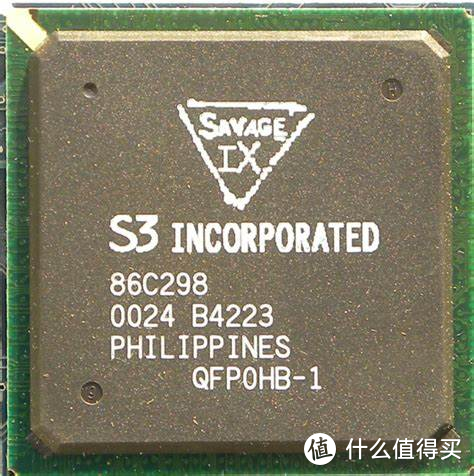
应该是这款S3 SuperSavage IX/C,IBM T23搭载的2D独显。虽然配置很低但是IBM ThinkPad堪称先进工业设计,理念领先行业很多年。像光驱位电池、光驱位小键盘这种设计至今也让人感到相当震撼,而小红帽指点杆键盘的使用体验更是让人终身难忘。感谢前辈让咱真正的开眼看世界,通过参考资料增长了自己的见识。
本作其实原作者并没有意识到S3的技术团队真正的去向,而只是粗略的了解了HTC收购S3商标的过去。实际上S3的技术由威盛大陆研发团队掌握了二十多年,现在仍然存在。
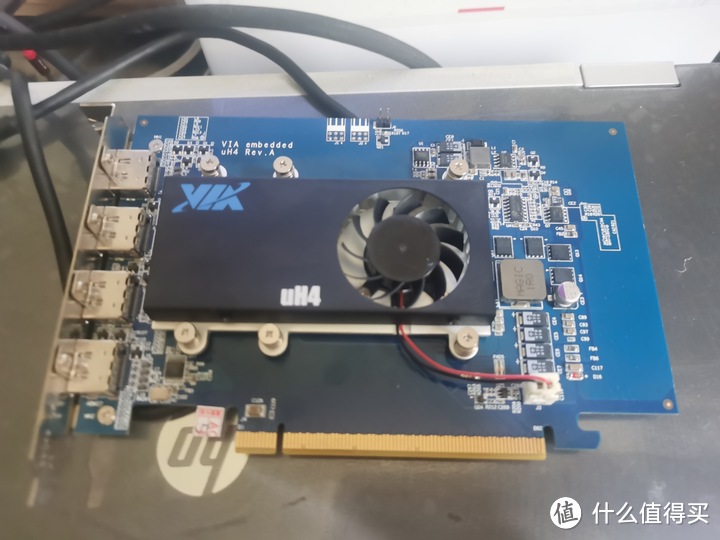
当年威盛虽然把S3这个商标左手倒右手从VIA转到了HTC,但是S3大陆研发团队却卖给了上海兆芯,事实上兆芯的成立就是威盛大陆研发团队原地改了所属,从威盛转到了上海市。
所以后来兆芯的GPU部门包括最近分出来的子公司格兰菲其实都可以认为是S3的直接继承者,享有当年S3的权利比如理论上在标准制定中具有和ATI NVIDIA对等的资质,以及其他诸如此类的权利。
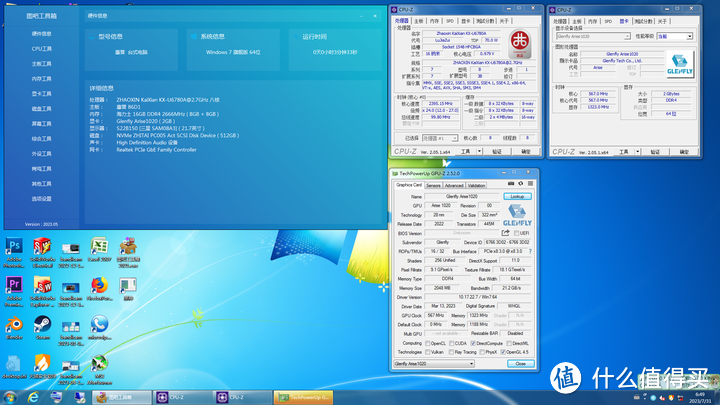
如今咱依然能从国产亮机卡中见证S3技术转移的历史,如果没有S3那么国产显卡的起点只会更低,目前的技术水平将更加落后。所以对于中国人民来说这确实是一家不会被遗忘的企业。
作者声明本文无利益相关,欢迎值友理性交流,和谐讨论~