

我们使用AI一般都是在解决一些小问题:项目怎么做?文章怎么写?这本书讲了什么?
但是我认为,现在的AI模型可以在一些“大问题”上帮助到我们。一方面,模型的训练数据越来越广,它们的智能在提高,思维更宏观更有深度;另一方面,如果你长期使用一个AI模型,系统已经对你建立了一个非常全面深入的侧写(Profile),它知道你是什么样的人、对什么感兴趣、有哪些困扰。它完全有能力给你提供人生建议。
例如:
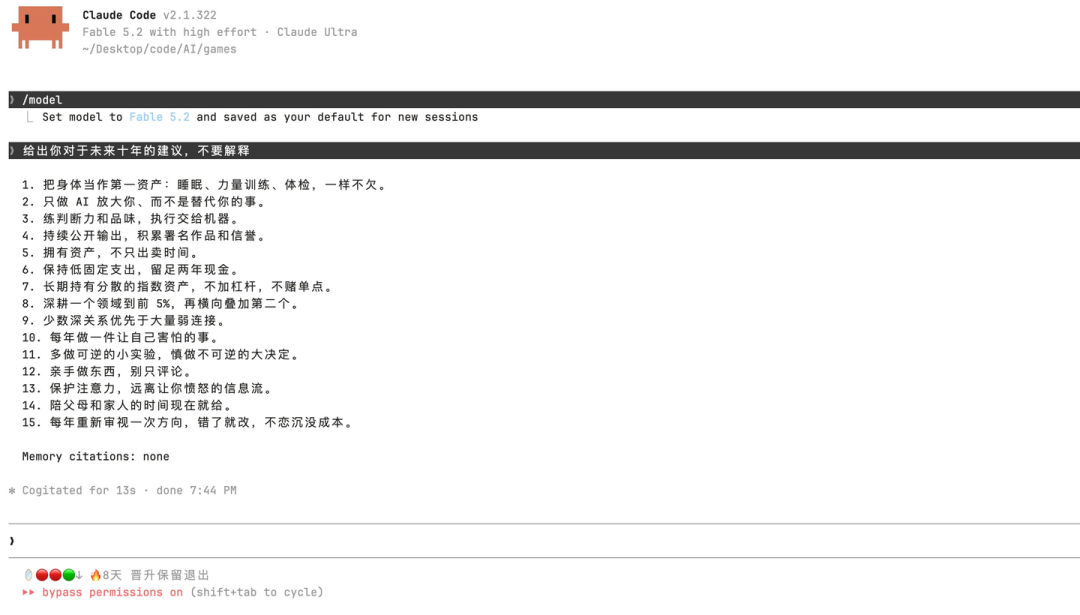
问AI什么样的“大问题”?这本身又是一个“元问题”。我认为这样的大问题至少满足以下几点:
充分利用到模型所存储的大量的人类知识,越多越好。
对人生影响巨大,比如能改变一个人的财务处境。
不能是人尽皆知的大道理,最好是非共识的、反直觉的。
于是我问AI:
What would be some good questions to ask an AI model, that:
- Use as much as possible the wisdom that gets distilled from human knowledge into the model
- Can have a large impact on my life, for instance, my financial situation
- Have non-obvious, better still, counter-intuitive answers
下面是几个模型对这个“元问题”的回答。
GPT-6What is the most effective way for someone with my skills and resources to become wealthy, even if it's completely different from how I currently make money?
对于像我这样拥有技能和资源的人来说,致富最有效的方法是什么?即使这种方法与我目前的赚钱方式完全不同。
Which skills that are highly rewarded today are likely to become commodities in the next five years, and which undervalued skills could become exceptionally valuable?
哪些目前备受青睐的技能在未来五年内可能不值钱,哪些被低估的技能可能会变得极具价值?
If software becomes nearly free to produce, what becomes more scarce—and what businesses become more valuable because of that scarcity?
如果软件的生产成本几乎为零,那么什么会变得更加稀缺?又有哪些企业会因为这种稀缺性而变得更有价值?
What beliefs do highly intelligent people tend to hold that are actually wrong, and why does intelligence sometimes make these mistakes harder to correct?
高智商的人往往持有哪些实际上是错误的信念?为什么智力有时会使这些错误更难纠正?
Which life opportunities have expiration dates that people fail to recognize until it's too late?
哪些人生机遇会过期,而人们往往直到为时已晚才意识到?
Opus-5.5I'm considering [big decision]. Assume it failed badly in five years. What are the most likely causes, and what do base rates say about people in my position?
我正在考虑[一项重大决定]。假设五年后这项决定彻底失败。最可能的原因是什么?基准概率对像我这样的人意味着什么?
What is my single biggest exposure to a ruinous, unrecoverable loss, and what’s the cheapest way to cut it, even if it lowers my expected return?
我面临的最大、无法挽回的损失风险是什么?即使会降低我的预期收益,降低这种风险的最便宜的方法是什么?
Given how my income and career are tied to a particular industry, how should that change my investments, housing, and risk-taking?
鉴于我的收入和职业与特定行业息息相关,这应该如何改变我的投资、住房和风险承担方式?
What does the research say people systematically get wrong when predicting what will make them happy, and which of my current goals or spending habits does that implicate?
研究表明,人们在预测什么会让自己快乐时,经常会犯哪些系统性的错误?这与我目前的哪些目标或消费习惯有关?
Who profits from the advice I'm currently following, and what would that advice look like if their incentives were reversed?
我目前遵循的建议中,谁从中获利?如果他们的利益翻转,这些建议又会是什么样子?
DeepSeek-V4.1Across personal finance, behavioral economics, economic history, and complexity theory, what are the most common ways people with my profile destroy wealth or financial optionality—and which of those am I most likely blind to? Rank them by expected lifetime impact and give me one 30-day test for each
像我这样的人最常以哪些方式毁掉财富或丧失财务选择权?而我又最有可能忽略了哪些方式?请按预期终身影响对这些方式进行排序,并为每种方式提供一个为期30天的测试。
If my goal were to maximize lifetime financial resilience and optionality rather than maximize expected return, what would I stop doing, start doing, and refuse to do—even if conventional advice says otherwise? Show where conventional advice is technically true but behaviorally or structurally wrong for someone like me.
如果我的目标是最大化终身财务韧性和选择权,而不是最大化预期收益,那么我会停止做什么、开始做什么、拒绝做什么,即使传统建议并非如此?请指出传统建议在技术层面上哪些是正确的,但在行为或结构上却不适合像我这样的人。
What are the strongest arguments that my current financial plan is solving the wrong problem? Identify the variable I am actually optimizing for—income, status, security, returns, optionality, etc.—the variable I should optimize for, and the trade-offs I am ignoring. Use base rates and historical analogies.
哪些最有力的论据表明我目前的财务计划解决的是错误的问题?请指出我实际优化的变量(收入、地位、安全感、回报、选择权等等)、我应该优化的变量,以及我忽略的权衡取舍。请运用基准概率和历史类比进行分析。
Which decisions in my life have asymmetric downside—where the upside is modest but the downside is ruinous or irreversible—and how should I change my decision rules to cap downside first? Include income concentration, leverage, illiquidity, guarantees, career bets, health, and relationships.
我人生中哪些决策存在不对称的下行风险——即收益有限但下行风险巨大或不可逆转——我应该如何改变决策规则以优先控制下行风险?请考虑收入集中度、杠杆、流动性不足、担保、职业投资、健康状况和人际关系等因素。
What would a diverse panel—a historian, behavioral economist, small-business owner, retiree, and skeptical statistician—disagree about in my situation, and where would they converge? Give me the convergence points as decision rules, and the disagreements as questions I must answer with my own values.
在我的情况下,一个由历史学家、行为经济学家、小企业主、退休人士和持怀疑态度的统计学家组成的多元化专家小组,会在哪些方面存在分歧,又会在哪些方面达成共识?请将这些共识点作为决策规则,并将分歧点作为我必须用自身价值观来回答的问题。
从AI的这些问题,我看到了两点规律:
避免灾难性错误比发现新机会更重要。
从基准概率出发思考问题。这不是我们习惯思考问题的方式,我们更习惯由内而外:“我想要做什么?”而不是“其他人做这件事的成功率有多高?”
可以把这些问题拷贝给你最常用的AI助手,看看它们怎么回答。如果你觉得AI的回答很有启发性,可以贴在评论区和大家分享。
当前文章无评论,是时候发表评论了